%20(7).png)


Common Flying & Stinging Insects in Northwest Ohio: A Homeowner’s Guide

If you spend much time outside during the spring, summer, or early fall in Northwest Ohio, chances are you've encountered your share of bees, wasps, hornets, yellow jackets, and other flying insects.
For homeowners in Van Wert, Celina, Paulding, Delphos, and the surrounding Northwest Ohio communities, flying and stinging insects can range from beneficial pollinators that should usually be left alone to aggressive pests nesting only a few feet from your front door.
Knowing what you're dealing with is the first step.
Here are some of the most common flying and stinging insects found in Northwest Ohio, how to identify them, where they typically nest, and when you may want to call a professional pest control company.
1. Yellow Jackets

Yellow jackets are one of the most troublesome stinging insects in Northwest Ohio, particularly during late summer and early fall.
They have smooth, brightly marked black-and-yellow bodies and are often mistaken for bees. Unlike honey bees, however, yellow jackets are wasps and can sting repeatedly.
Yellow jackets frequently build nests:
Underground in abandoned rodent burrows
Around landscaping and lawns
Inside wall voids
Under siding
Around decks and porches
Inside structures through small exterior openings
One of the biggest problems with yellow jackets is that homeowners may not realize a nest is present until they accidentally disturb it while mowing, trimming landscaping, or working around the property.
Yellow jackets also become especially noticeable around trash cans, outdoor meals, sugary drinks, patios, and cookouts.
Are Yellow Jackets Aggressive?
They can be.
Yellow jackets aggressively defend their colonies when they believe the nest is threatened. Because they are capable of delivering multiple stings, an active nest near a home, business, playground, patio, or other high-traffic area should be taken seriously.
Ohio State University Extension notes that several species of yellow jackets occur in North America and that the German yellowjacket has been established in Ohio for decades.
SEO Tip for Local Homeowners: If you're seeing numerous yellow jackets repeatedly entering the same hole in the ground, wall, siding, or structure around your Van Wert, Celina, or Paulding home, there may be an active colony nearby.
2. Paper Wasps
Paper wasps are another extremely common sight around Northwest Ohio homes.
They generally have long, slender bodies and long legs that can often be seen dangling beneath them while they fly.
Paper wasps construct the familiar open, umbrella-shaped paper nests that homeowners frequently discover underneath:

Roof eaves
Deck railings
Porch ceilings
Window ledges
Outdoor furniture
Playsets
Sheds
Gazebos
Overhangs
A small paper wasp nest away from people may not create a significant problem. However, nests located beside doors, patios, decks, playground equipment, or other frequently used areas can lead to stings.
Paper wasps are also beneficial predators because they feed on other insects.
3. Bald-Faced Hornets
One of the easiest stinging insects to recognize in Ohio is the bald-faced hornet.
Despite its name, the bald-faced hornet is actually a type of yellow jacket rather than a true hornet.
These insects have striking black-and-white coloration and build large enclosed paper nests that may eventually become roughly football-shaped.

Look for their nests hanging from:
Trees
Shrubs
Building overhangs
Utility structures
Other protected elevated locations
Bald-faced hornets can aggressively defend their colony if the nest is disturbed.
A large nest high in a tree and away from people may not necessarily need to be disturbed. A nest beside a driveway, sidewalk, entrance, playground, deck, or frequently used section of the yard is a different situation.
4. European Hornets
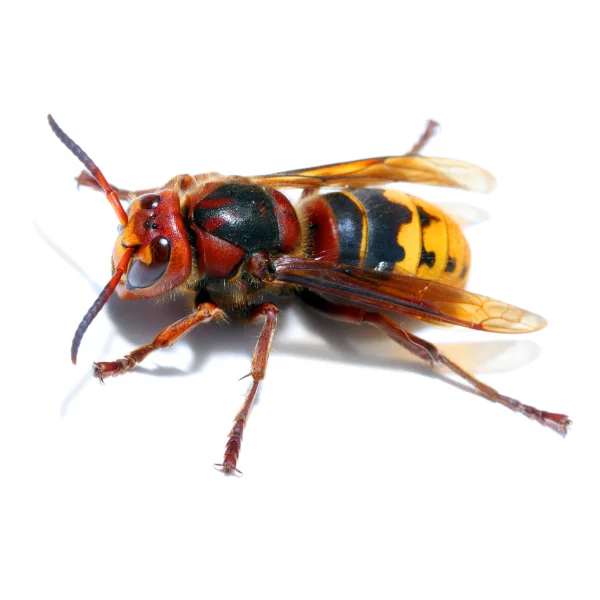
European hornets are another large wasp found in Ohio. In fact, Ohio State University Extension identifies the European hornet as the only true hornet species established in North America.
Their large size can make them intimidating.
European hornets commonly establish colonies inside protected cavities such as:
Hollow trees
Wall voids
Attics
Sheds
Barns
Other structural voids
They're beneficial predators of other insects, but a colony established in or immediately around a home can become a concern.
If you notice large hornets repeatedly entering and exiting the same opening in your house, garage, barn, or tree, avoid sealing the entrance until the insect and nest have been properly identified and addressed.
5. Cicada Killer Wasps
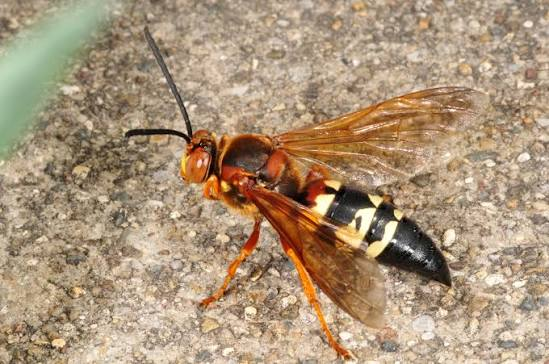
Few insects cause more immediate concern based purely on their size than the cicada killer wasp.
These very large wasps become noticeable during the summer when annual cicadas are active in Ohio.
Cicada killers typically dig burrows in sunny areas with relatively bare or thin soil, including:
Lawns
Landscape beds
Sidewalk edges
Driveway edges
Patio areas
Sandy or loose soil
Female cicada killers hunt cicadas and carry them back to their underground burrows as food for their developing young.
Despite their intimidating appearance, cicada killers are generally far less aggressive toward people than social wasps such as yellow jackets.
Males may aggressively patrol an area and fly toward people, but male wasps cannot sting.
Large aggregations can still become a nuisance, particularly when burrows develop around patios, sidewalks, playgrounds, commercial properties, or heavily used lawns.
6. Carpenter Bees

Do you have a large bee hovering around your deck, porch, fence, barn, or wooden structure?
It could be a carpenter bee.
Large carpenter bees resemble bumble bees, but one of the easiest differences to spot is the abdomen. Carpenter bees typically have a shiny, relatively hairless abdomen, while bumble bees are much fuzzier.
Carpenter bees excavate tunnels into wood to create nesting areas.
Common locations around Northwest Ohio properties include:
Decks
Fascia boards
Wooden siding
Porch railings
Pergolas
Barns
Fence posts
Exposed roof timbers
Carpenter bee activity can become particularly frustrating when the same wooden structures are used year after year.
Male carpenter bees frequently hover directly in front of people and may appear aggressive. However, males cannot sting. Females can sting but generally do so only when handled or seriously provoked.
7. Bumble Bees
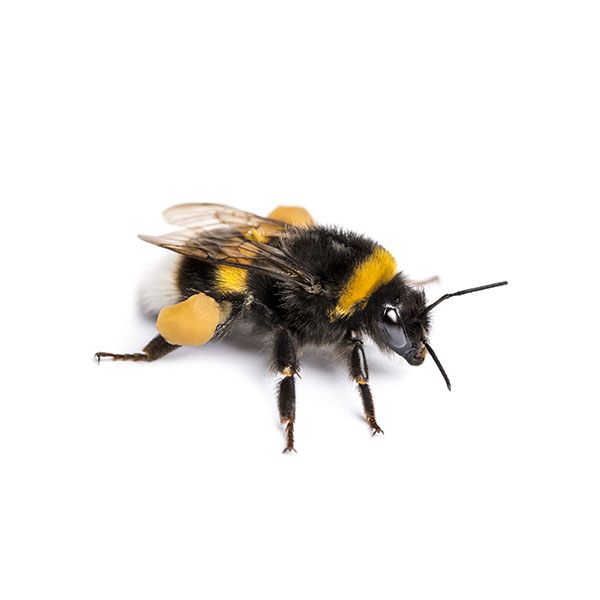
Bumble bees are large, fuzzy black-and-yellow bees commonly seen visiting flowers throughout
Northwest Ohio. Unlike carpenter bees, bumble bees have extensively hairy bodies. They are extremely valuable pollinators. Bumble bee colonies commonly develop underground, sometimes using abandoned rodent burrows. Ohio State's bee identification resources note that bumble bees can remain active during cooler and cloudier conditions when many other bees aren't flying.
If a bumble bee nest is located well away from people, leaving it alone is often the best approach.
However, a nest immediately beside an entrance, playground, patio, walkway, or other heavily traveled location may require professional evaluation.
8. Honey Bees

Honey bees are another important pollinator found throughout Ohio.
When homeowners discover a large number of bees, proper identification is extremely important before any treatment is considered.
A cluster or swarm of honey bees does not automatically mean you have an aggressive pest problem. Swarming is part of the honey bee colony's natural reproductive process.
Whenever possible, honey bee swarms should be evaluated for relocation by an experienced beekeeper or other qualified professional rather than automatically treated as pests.
When Are Stinging Insects Most Active in Northwest Ohio?
Activity varies by species, but homeowners typically begin noticing more flying insect activity during spring as temperatures rise.
Wasp and hornet colonies grow throughout the warmer months. By late summer and early fall, established social wasp colonies can contain substantially more individuals than they did earlier in the year.
This is one reason homeowners around Van Wert, Celina, Paulding, and surrounding Northwest Ohio communities often notice significant yellow jacket, hornet, and wasp activity later in the summer.
Bee vs. Wasp: What's the Difference?
A quick way to tell them apart is to look at the body.
Bees are generally hairier because those hairs help collect pollen.
Wasps tend to have smoother bodies, narrow waists, and less visible hair.
Ohio State University Extension also points out that bees feed primarily on pollen and nectar, while many wasps are predators of other insects.
That means many of the wasps flying around your property are actually helping control other insect populations.
Should Every Wasp or Bee Nest Be Removed?
No.
Many bees and wasps are beneficial pollinators or predators and play an important role in Ohio's ecosystem.
The location of the nest matters.
A nest high in a tree at the back of a large property is very different from a yellow jacket colony beside your front steps.
Professional control becomes much more reasonable when stinging insects are nesting:
Inside a home or business
Beside an entrance
Under a frequently used deck
Around patios or pools
Near children's play areas
Along sidewalks
Inside siding or wall voids
Around areas regularly maintained or mowed
Anywhere people are at significant risk of accidentally disturbing the colony
People with known severe insect-sting allergies should use additional caution around suspected nests.
Flying & Stinging Insect Control in Van Wert, Celina & Paulding, Ohio
If you're seeing yellow jackets, wasps, hornets, carpenter bees, or other stinging insects around your Northwest Ohio property, identifying the insect and locating the nesting area are important first steps.
At ProGuard Pest & Lawn, we help homeowners and businesses identify and address pest problems throughout the Van Wert, Celina, Paulding, and surrounding Northwest Ohio areas.
Whether you're seeing wasps underneath your eaves, yellow jackets entering a wall, hornets around your property, or you're simply unsure what type of flying insect you're dealing with, professional identification can help determine the best approach.
Need Help With Wasps, Hornets or Yellow Jackets?
Don't wait until someone accidentally discovers a nest the hard way.
Contact ProGuard Pest & Lawn for professional pest control services in Van Wert, Celina, Paulding, and surrounding Northwest Ohio communities.
Control Pests. Save Lawns. Serve God. Impact People.


Comments